Jurong Wordart Print: A Hand-Drawn Word Cloud Asset for Thoughtful Design Applications
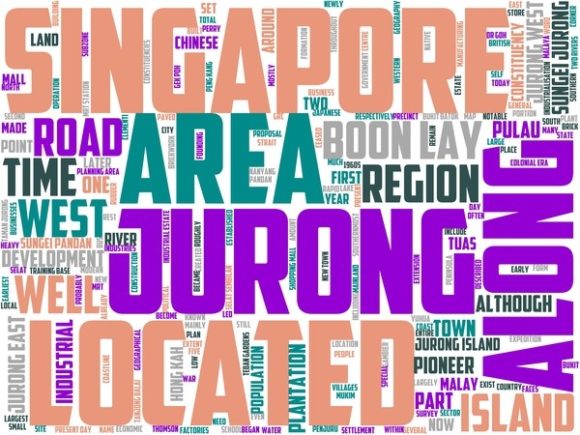
Jurong Wordart Print is a hand-drawn, colorful word cloud illustration—delivered as a high-resolution digital file—designed for practical integration across physical and digital creative projects. Unlike algorithmically generated word clouds, this asset reflects intentional composition: each word is carefully placed, sized, and styled to support visual balance and thematic resonance. It’s not a template builder or generative tool; it’s a finished, ready-to-use design element created by an illustrator with attention to legibility, color harmony, and organic flow.
What Makes This Word Cloud Distinctive in Practice
The most immediately noticeable quality of Jurong Wordart Print is its tactile authenticity. Lines have subtle variation—some thicker, some tapering—suggesting ink or brush work rather than vector uniformity. Colors are saturated but not oversaturated, with thoughtful contrast between adjacent words that supports readability without visual fatigue. The layout avoids rigid symmetry while maintaining clear focal weight, allowing designers to crop, scale, or layer the asset without losing coherence.
It includes no embedded fonts or editable text layers—this is intentional. The words are part of the illustration itself, meaning what you see is what prints consistently. That eliminates common pitfalls like missing font licenses, rendering inconsistencies across devices, or unintended kerning shifts when scaling. For users who prioritize predictable output—especially in print production—this reliability matters more than editable flexibility.
Real-World Usability Across Mediums
In textile applications—such as screen-printed t-shirts, embroidered tote bags, or woven pillow covers—Jurong Wordart Print holds up well at medium to large sizes (12–24 inches wide). Its line weight and spacing translate cleanly to fabric dye processes and embroidery digitizing software, provided minimum line thickness guidelines are observed during prep. Users report success using it directly in DTG workflows with minimal rasterization adjustment.
For paper-based uses—business cards, postcards, brochures, or program booklets—the design scales cleanly down to 3 inches wide without becoming muddy. That’s due to deliberate negative space management and consistent stroke contrast. One educator used it as a classroom poster for a “Growth Mindset” unit, printing at 24×36 inches on matte stock; students consistently identified individual words from six feet away, confirming effective hierarchy and contrast.
Digital applications also benefit. Bloggers embed it into newsletter headers or ebook chapter dividers where visual warmth supports tone without competing with body copy. Marketers repurpose sections of the cloud as background textures behind transparent call-to-action buttons on landing pages—its non-repetitive nature avoids the “tiled pattern” fatigue common with generic backgrounds.
Strengths That Align With Professional Workflows
- Consistency across outputs: Because it’s a single-layer raster or flattened vector file (depending on format purchased), color values remain stable whether exported to CMYK for offset printing or sRGB for web display.
- Time efficiency: No need to source, curate, and balance dozens of words manually—or troubleshoot font licensing for commercial use. The thematic cohesion is already resolved.
- Brand-aligned adaptability: While the base palette is fixed, designers routinely adjust overall hue/saturation or apply duotone overlays in Photoshop or Illustrator to match brand guidelines—without degrading integrity.
- Scalability within limits: Performs reliably from 2 inches (e.g., sticker die-cuts) up to 48 inches (large-format wall decals), assuming original file resolution is maintained and appropriate export settings applied.
Who Benefits Most—and Where It Fits Best
Jurong Wordart Print serves creators who value craft-informed visuals but operate under time or technical constraints. Small business owners launching a new product line often use it on packaging inserts or thank-you cards to reinforce core values (“handmade,” “sustainable,” “thoughtful”) without commissioning custom illustration. Freelance designers incorporate it into pitch decks to visually anchor mood boards before client sign-off—its warmth signals approachability without sacrificing polish.
Educators find it useful for bulletin board displays or printable reflection sheets where abstract concepts (e.g., “collaboration,” “curiosity,” “resilience”) gain concrete presence. One university writing center reported higher student engagement with workshop materials when Jurong Wordart Print was used as a header—participants described it as “inviting but not childish,” a nuance that aligns with its balanced aesthetic.
It’s less suited for highly regulated branding systems requiring strict typographic control (e.g., enterprise SaaS platforms with strict UI font stacks) or projects demanding multilingual word substitution. Since the words are drawn—not typed—it can’t be localized without redrawing. Similarly, users needing dynamic data-driven word sizing (e.g., frequency-weighted terms from survey responses) will need complementary tools.
Practical Integration Tips Based on Field Use
When preparing for print: convert to CMYK early and soft-proof against your printer’s profile. Avoid aggressive sharpening—its hand-drawn texture already provides natural edge definition. For textile use, simplify color count in prepress if working with limited-screen-count garment printers; many users reduce the palette to 5–7 dominant hues with good results.
For digital reuse: save layered PSD or AI versions (if offered) for non-destructive adjustments. If only a PNG is available, use blending modes like “Multiply” or “Overlay” over solid-color backgrounds to extend versatility without altering the original file.
One limitation worth noting: because it’s hand-drawn, exact replication of spacing or alignment isn’t possible if you attempt to extract and reposition individual words. Treat it as a unified composition—not a modular toolkit. That’s a constraint, yes—but also part of what gives it visual authority.
Long-Term Value and Contextual Fit
Jurong Wordart Print doesn’t replace strategic typography or custom illustration. Instead, it fills a specific niche: delivering expressive, human-scaled visual language where speed, authenticity, and emotional resonance matter more than granular customization. Its longevity comes from restraint—not trend-chasing gradients or excessive embellishment—but quiet confidence in line, color, and arrangement.
Used deliberately, it supports communication goals without overshadowing content. A wellness coach uses it on downloadable journal prompts—not as decoration, but as a subtle reinforcement of intentionality. A boutique publisher features it on the inside cover of a poetry chapbook, where its irregular rhythm echoes the cadence of the verses. In both cases, the asset works because it’s treated as a collaborator in meaning-making—not just visual filler.
If your workflow involves frequent creation of tangible, audience-facing items—whether apparel, stationery, educational tools, or promotional collateral—and you value assets that look handmade without requiring hand-drawing skills, Jurong Wordart Print earns consideration. It won’t solve every design challenge, but where warmth, clarity, and consistency intersect, it delivers measurable utility.