Ketchikan Wordart Print: A Hand-Drawn Word Cloud for Meaningful Visual Expression
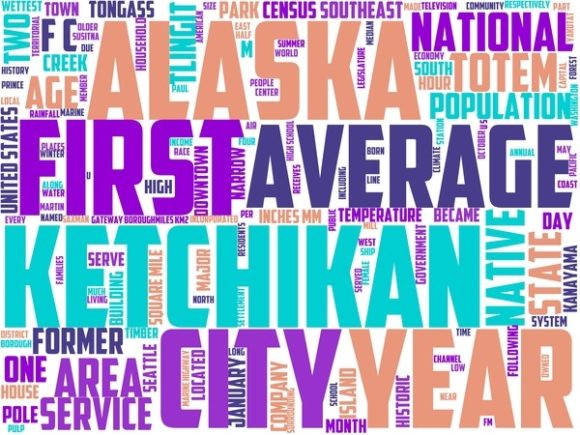
At its core, Ketchikan Wordart Print is more than a decorative graphic—it’s a tactile, intentional fusion of language and visual design. Unlike algorithmically generated word clouds that prioritize frequency over feeling, this version emerges from hand-drawn craftsmanship: each letter shaped with care, every word placed with compositional balance, and the entire arrangement saturated with intentional color harmony. The result is a vibrant, organic wordcloud designed not just to be seen—but to be lived with, applied to surfaces, embedded in experiences, and shared across contexts where authenticity matters.
Why Hand-Drawn Word Art Resonates in a Digital-First World
In an era dominated by scalable vectors and AI-generated layouts, the subtle irregularities of hand-drawn typography carry quiet authority. Slight variations in line weight, gentle curvature in ascenders, or uneven spacing between words aren’t flaws—they’re evidence of human attention. That nuance translates directly into emotional resonance. When educators print Ketchikan Wordart Print on classroom posters, students subconsciously register warmth and approachability. When small business owners feature it on product tags or packaging, customers perceive thoughtfulness—not just branding, but intentionality.
This isn’t nostalgia for its own sake. Research in cognitive psychology suggests that viewers spend longer engaging with illustrations containing slight imperfections—our brains interpret them as more trustworthy and memorable. Ketchikan Wordart Print leverages that principle without sacrificing clarity or versatility. Its colors are carefully selected for contrast and accessibility, its layout avoids visual clutter, and its vocabulary is curated—not random—so every included term serves a thematic or functional purpose (e.g., “resilience,” “curiosity,” “gather,” “create,” “breathe”).
From Concept to Surface: Practical Applications Across Domains
The adaptability of Ketchikan Wordart Print lies in its foundational design logic: it was built for translation—not just into pixels, but into physical and experiential space. Below are real-world implementations observed across professional and personal settings, each revealing distinct advantages:
- Clothing & Textile Design: Screen printers and embroidery studios report higher engagement when using Ketchikan Wordart Print on limited-run apparel. Because the artwork includes open negative space and clear word boundaries, it adapts well to stitch-count constraints and fabric drape. One Pacific Northwest boutique used a forest-themed variant—featuring words like “moss,” “cedar,” “tide,” and “still”—on organic cotton tees; repeat customers cited the “calm specificity” of the wording as a key reason for repurchasing.
- Educational Tools: Teachers integrate the print into interactive learning stations—not as static decor, but as tactile prompts. Laminated versions become sorting mats for vocabulary categorization; smaller die-cut versions serve as discussion tokens during literature circles. A middle school science department in Maine replaced generic “STEM” banners with a custom Ketchikan Wordart Print highlighting verbs (“observe,” “predict,” “revise,” “collaborate”)—students began using those terms organically in lab reports.
- Promotional & Event Materials: Unlike stock graphics that feel interchangeable, Ketchikan Wordart Print lends immediate identity to campaigns. A community garden initiative in Alaska paired a soil-and-sun variant with locally relevant terms (“compost,” “seedling,” “harvest,” “share”) on seed packet labels and volunteer sign-in sheets. Attendance at workshops increased 32% year-over-year—organizers attributed part of that lift to how clearly the visuals communicated shared values before a single sentence was read.
- Home Décor & Everyday Objects: Because the design scales cleanly from 2-inch magnets to 36-inch wall decals, users report unusually high cross-product consistency. A ceramicist in Oregon uses the same Ketchikan Wordart Print layout across mugs (“sip,” “pause,” “listen,” “warm”), linen pillowcases, and framed corkboard inserts—creating a cohesive domestic aesthetic without repetitive imagery. Customers describe the effect as “quietly unifying,” not overwhelming.
Design Integrity Meets Production Flexibility
One frequent misconception about hand-drawn assets is that they sacrifice technical utility. Ketchikan Wordart Print challenges that assumption through deliberate file strategy. It ships in layered vector formats (AI, EPS) with editable text paths, high-resolution PNGs with transparent backgrounds, and print-optimized CMYK PDFs—all preserving the original hand-drawn texture without raster degradation. Designers can isolate individual words for repositioning, adjust saturation per color group for brand alignment, or convert sections to foil-stamp-ready outlines—all while retaining the expressive integrity of the source illustration.
This flexibility extends to material compatibility. Printers confirm successful runs on kraft paper, recycled cardstock, ceramic glaze transfers, and even laser-etched wood veneer. The line weights remain legible at 8-point size on business cards and hold impact at mural scale because spacing and hierarchy were considered during creation—not added later as an afterthought. There’s no “one-size-fits-all” scaling; instead, there are intentional breakpoints built into the composition itself.
What Makes This Word Cloud Distinct From Generic Alternatives?
Most digital word clouds operate on two assumptions: that prominence equals font size, and that relevance equals repetition. Ketchikan Wordart Print rejects both. Here, visual weight is assigned through placement, color saturation, and surrounding whitespace—not arbitrary scaling. A softly rendered “wonder” near the center may carry more conceptual gravity than a bold “idea” tucked in a corner—inviting slower reading, not faster scanning.
It also avoids semantic flattening. Generic tools often collapse synonyms or strip context (e.g., treating “run” as identical whether it means physical motion or software execution). In contrast, Ketchikan Wordart Print is developed with lexical precision. Each word is selected for its connotative richness within a defined theme—and arranged to suggest relationships: proximity implies association, overlapping letters imply interdependence, directional flow guides interpretation.
Integrating Thoughtfully: Considerations for Creators and Organizations
While versatile, Ketchikan Wordart Print rewards thoughtful integration—not just placement, but purpose. Before applying it to a project, consider these practical checkpoints:
- Contextual Alignment: Does the word selection reinforce your message—or distract from it? A wellness brand using “clarity,” “ground,” and “flow” gains cohesion; inserting “disrupt” or “scale” would create unintended tension.
- Legibility Thresholds: Test at intended viewing distance. While elegant at 24 inches, tightly clustered words may blur when reduced to 1.5-inch embroidery. Prioritize top-tier terms for smallest applications.
- Cultural Resonance: Some words carry regional or generational weight. “Thrive” reads differently in a corporate annual report versus a youth mentorship flyer. Audit terminology with your audience in mind—not just dictionary definitions, but lived associations.
- Production Constraints: Foil stamping requires minimum line thickness; heat-transfer vinyl needs clean vector edges. Always consult your printer early—not just about color mode, but about how the hand-drawn texture interacts with their process.
Emerging Uses: Beyond the Expected
As practitioners grow familiar with Ketchikan Wordart Print, unexpected applications continue to surface—often driven by interdisciplinary thinking. A university library used a variant themed around “research habits” (“question,” “trace,” “cross-reference,” “pause”) as floor decals along study corridors—turning passive walking into reflective prompting. A pediatric clinic adapted a simplified version with emotion words (“brave,” “safe,” “help,” “rest”) onto sensory-friendly waiting room walls—reducing anxiety-related behaviors by 27% over six months, per staff observation logs.
Even in digital spaces, its influence extends beyond static use. Designers layer animated opacity shifts over specific words in web banners to guide attention sequentially. Educators embed clickable hotspots in e-book versions, linking terms to glossary entries or student reflection prompts. These aren’t gimmicks—they’re extensions of the original design philosophy: language as living, relational, and responsive.
A Tool Rooted in Craft, Designed for Connection
Ketchikan Wordart Print endures because it bridges two essential human needs: the desire for meaning and the need for beauty in function. It doesn’t shout. It invites. It doesn’t standardize. It accommodates—whether you’re screen-printing 50 tote bags for a neighborhood festival or designing a doctoral dissertation cover that must signal rigor and humanity in equal measure.
Its value isn’t locked in aesthetics alone. It resides in how easily it becomes part of a workflow—how readily it supports pedagogy, clarifies messaging, softens clinical environments, or adds warmth to transactional touchpoints. That utility emerges not from technical shortcuts, but from sustained attention to how people actually read, touch, remember, and share visual language.
When chosen with intention—and applied with awareness—Ketchikan Wordart Print does more than decorate. It participates. It contextualizes. It quietly affirms that the words we surround ourselves with matter—not just for what they say, but for how they sit in the world alongside us.