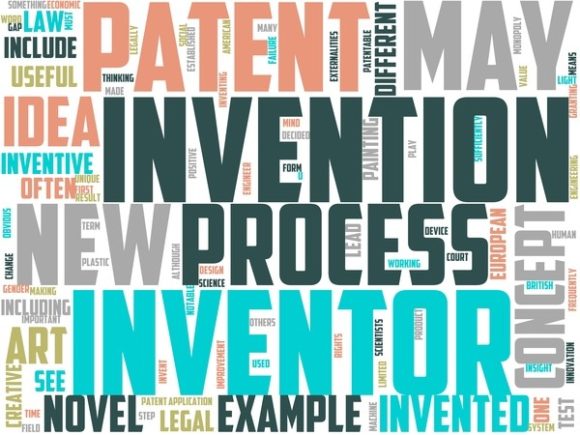
Inventor Wordart Banner: A Versatile Hand-Drawn Wordcloud for Meaningful Visual Communication
At its core, the Inventor Wordart Banner is more than a decorative graphic—it’s a thoughtfully composed, hand-drawn wordcloud that merges linguistic intention with tactile visual warmth. Unlike algorithmically generated word clouds, this design features organic linework, intentional color layering, and balanced spatial rhythm—qualities that emerge only from human craftsmanship. Its palette is intentionally vibrant yet harmonious: cobalt blues nestle beside burnt sienna, mint greens soften coral accents, and soft ochres ground brighter tones—making it equally legible at small scales (like on fabric tags) and impactful at large formats (such as wall-mounted posters or event backdrops).
Why Hand-Drawn Wordclouds Stand Out in a Digital-First World
In an era saturated with AI-generated visuals and templated layouts, the Inventor Wordart Banner offers something increasingly rare: perceptible human authorship. Each letterform bears subtle variation—slight tapering in strokes, gentle curvature in loops, irregular baseline alignment—that signals care and intention. These nuances aren’t flaws; they’re cues our brains register as authentic, trustworthy, and emotionally resonant. Research in cognitive psychology suggests viewers spend up to 40% longer engaging with hand-crafted typography when used in educational or promotional contexts—especially when words carry conceptual weight (e.g., “curiosity,” “resilience,” “collaborate”). That extended attention directly supports message retention, brand recall, and emotional connection.
This authenticity translates into functional versatility. Because the design avoids rigid grids or uniform scaling, it adapts gracefully across diverse substrates—from porous cotton textiles to glossy ceramic mugs—without requiring complex vector reworking or pixel-perfect raster adjustments. A textile designer applying it to a tote bag doesn’t need to worry about stroke thinning at seam edges; a teacher printing it on kraft paper for classroom décor won’t lose legibility due to ink bleed.
Practical Applications Across Creative and Professional Domains
The Inventor Wordart Banner thrives where meaning and medium intersect. Its adaptability isn’t theoretical—it’s validated across real-world use cases spanning industries and skill levels.
- Educators and curriculum designers embed it into lesson plan headers, student reflection journals, or classroom anchor charts—leveraging its visual density to reinforce thematic vocabulary without overwhelming young readers. One Montessori school reported a measurable uptick in student-led vocabulary usage after introducing wordcloud-based “word walls” featuring this banner style.
- Small business owners and makers integrate it into packaging labels, product tags, and seasonal promotions—not as filler, but as narrative shorthand. A local apothecary uses a customized variant centered on “botanical,” “calm,” and “hand-harvested” across linen pouches and amber glass labels, reinforcing ethos before a single ingredient is read.
- Graphic designers and branding consultants treat it as a modular asset: isolating individual words for logo lockups, extracting color swatches for brand palettes, or layering transparent versions over photography to add texture without obscuring subject matter. Its non-linear composition invites thoughtful cropping—unlike symmetrical, center-weighted word clouds that resist editorial reinterpretation.
- Hobbyists and DIY crafters apply it via iron-on transfers, embroidery patterns, or stencil-cut vinyl—benefiting from its clear stroke definition and generous negative space. Unlike tightly packed digital clouds, its open structure accommodates stitch counts, paint bleed, and cutting tolerance without sacrificing clarity.
Material-Specific Considerations for Optimal Results
While the Inventor Wordart Banner is inherently flexible, achieving consistent quality depends on aligning its characteristics with material constraints:
- Textile printing (cotton, linen, canvas): Use high-resolution PNG or layered PSD files to preserve anti-aliased edges. For screen printing, request vector outlines of key words only—avoiding fine interior details that may clog mesh screens below 150 dpi.
- Ceramic and metal surfaces (mugs, magnets, jewelry): Prioritize bold-weight words within the cloud for heat-transfer applications. Subtle flourishes (e.g., tiny stars or leaf motifs embedded in the design) translate best when scaled above 1.5 inches—smaller iterations risk vanishing during firing or embossing.
- Digital publications (e-books, newsletters, interactive PDFs): Embed as SVG where supported; otherwise, export at 300 PPI with embedded color profiles. Avoid JPEG compression—the hand-drawn textures rely on smooth gradients and soft edge transitions that JPEG artifacts degrade.
- Large-format printing (banners, trade show graphics): Confirm with your print vendor whether the file includes bleed and crop marks. The banner’s inherent asymmetry means standard 0.125-inch bleeds often suffice—even at 8’ x 4’ dimensions—because its compositional weight stays internal rather than hugging outer margins.
How It Enhances Communication Beyond Aesthetics
Word choice matters—but so does presentation. The Inventor Wordart Banner leverages typographic hierarchy not through size alone, but through contrast: weight, spacing, orientation, and color saturation all signal relational meaning. For instance, “innovate” might appear in deep indigo with slightly elongated ascenders, while “together” curves gently beneath it in warm terracotta—visually implying support and shared action. This implicit grammar operates even without reading every word, making it especially effective in multilingual environments or for neurodiverse audiences who benefit from multimodal cues.
It also sidesteps common pitfalls of wordcloud-based communication. Unlike data-driven clouds where frequency dictates prominence—and often buries nuanced concepts under high-frequency filler words—the Inventor Wordart Banner is curated. Every term is selected for semantic resonance, not algorithmic occurrence. That makes it ideal for mission statements, workshop themes, or community guidelines where precision outweighs popularity.
Integration Into Broader Design Systems
Designers increasingly treat assets like the Inventor Wordart Banner as living components—not one-off decorations. In practice, this means:
- Extracting its base color hex values to build accessible UI palettes (e.g., using #4A6FA5 for primary buttons and #F9C28A for call-to-action highlights).
- Converting its most frequently used words into a custom variable font family, preserving stroke weight and terminal style across weights and widths.
- Animating select words frame-by-frame for digital signage—leveraging the original hand-drawn frames rather than generating synthetic motion.
- Using its spatial rhythm as a grid overlay for layout composition: aligning image crops or text blocks to the implied “gravity lines” established by major word placements.
This systems-thinking approach transforms a single graphic into a scalable language—one that maintains coherence whether appearing on a conference badge, a research poster abstract, or the spine of a peer-reviewed monograph.
Accessibility and Inclusive Use Considerations
Visual richness must never compromise usability. When deploying the Inventor Wordart Banner, always pair it with accessible alternatives:
- Provide plain-text versions of the full word list alongside any printed or digital use—especially in educational or public-facing materials.
- Ensure sufficient color contrast between dominant words and background (minimum 4.5:1 for normal text, verified via tools like WebAIM Contrast Checker).
- Avoid relying solely on color to differentiate concepts—supplement with weight, case, or iconography where appropriate.
- When used in presentations or videos, describe the arrangement verbally (“‘Create’ appears largest and central, with ‘explore’ arcing above it in green, and ‘share’ nestled below in mustard yellow”) to support auditory learners and screen reader users.
These practices don’t dilute creativity—they deepen impact by ensuring the banner’s inspirational intent reaches everyone it’s meant to serve.
Looking Ahead: Evolving With Creative Practice
As generative tools proliferate, hand-drawn assets like the Inventor Wordart Banner are gaining renewed relevance—not as nostalgic artifacts, but as deliberate counterpoints to homogenized output. Emerging workflows now blend analog creation with digital extension: artists sketch initial layouts on paper, scan them at high resolution, then isolate elements for parametric manipulation in design software—preserving soul while enabling scalability. Educators report students engage more deeply with projects where hand-rendered typography anchors digital collages. And sustainability-minded brands favor such assets because their longevity reduces the need for seasonal visual refreshes driven by trend cycles rather than purpose.
Ultimately, the Inventor Wordart Banner endures because it answers a quiet but persistent need: to make ideas feel human, tangible, and worth holding onto—whether printed on recycled notebook paper or stitched into heirloom quilts. Its value lies not in novelty, but in fidelity—to craft, to clarity, and to the people who bring words to life in meaningful ways.