Karstology Wordart Print: A Versatile Hand-Drawn Wordcloud for Creative Professionals
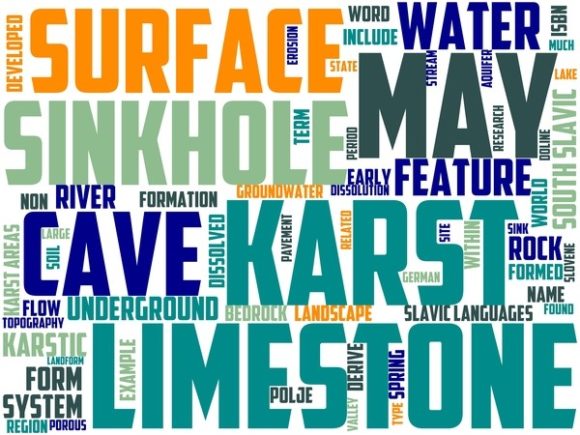
Karstology Wordart Print is a thoughtfully crafted, hand-drawn wordcloud design—vibrant, organic, and intentionally unpolished in the best possible way. Unlike algorithm-generated word clouds or over-saturated digital templates, this asset reflects genuine illustrative skill: each word is carefully placed, sized, and styled to balance visual rhythm with legibility. It’s not just decorative filler—it’s a functional design element built for adaptability across physical and digital applications.
What Sets Karstology Wordart Print Apart
The strength of Karstology Wordart Print lies in its tactile authenticity. Every curve, stroke, and color transition was drawn by hand—not traced, not vectorized from stock, and not auto-generated. That shows up in subtle ways: slight variations in line weight, overlapping letterforms that feel intentional rather than accidental, and a color palette that avoids digital uniformity without sacrificing cohesion. The words themselves are inspirational but neutral enough to suit multiple contexts—terms like “create,” “explore,” “grow,” “inspire,” “connect,” and “discover” appear frequently, arranged to encourage interpretation rather than prescribe meaning.
This isn’t a single-purpose graphic. It’s delivered as a high-resolution PNG with transparent background (300 DPI, CMYK and RGB versions included), making it suitable for both print production and web use. Vector variants are not provided—but that’s a deliberate trade-off. The hand-drawn texture would lose integrity if fully converted to scalable vectors, so the raster format preserves fidelity where it matters most: in final output.
Real-World Usability Across Projects
In practice, Karstology Wordart Print performs well when integrated into layered designs—not as a standalone hero image, but as a foundational visual motif. For example, a small business owner launching a wellness retreat used it as a background texture beneath semi-transparent typography on a brochure; the soft edges and warm tones supported the brand’s calm, grounded tone without competing for attention. Similarly, an educator incorporated a scaled-down version into a classroom poster about growth mindset—its organic layout invited students to linger and discover new words, supporting engagement more effectively than a rigid grid layout.
Textile designers have applied it successfully to cotton tote bags and linen pillow covers using screen printing and direct-to-garment methods. Because the design avoids fine hairlines and extreme contrast shifts, it holds up under standard fabric printing tolerances. On ceramics and mugs, it translates cleanly at medium scale—especially when paired with matte glazes that soften harsh edges without muting color.
Where it excels most is in mixed-media workflows. Scrapbookers report strong results when layering printed copies over watercolor paper or using cut-out sections as collage elements. Its irregular boundaries make it easier to integrate with other hand-drawn assets than geometrically perfect stock graphics, which often create unintentional visual dissonance.
Who Benefits—and When It Fits Best
Karstology Wordart Print serves professionals who value craft over convenience—those who understand that a well-placed, human-made detail can elevate perceived quality more than technical perfection. It’s especially useful for:
- Small business owners developing cohesive branding systems on limited budgets—particularly those in creative services, education, holistic health, or artisan retail;
- Marketers and event planners producing invitations, programs, and banners where warmth and approachability matter more than corporate polish;
- Educators and curriculum designers creating classroom materials that avoid sterile aesthetics while maintaining clarity;
- Self-publishing authors and indie publishers designing book interiors, ebook covers, or promotional postcards with distinctive visual identity;
- Product designers exploring textile, stationery, or home décor lines where handmade appeal supports premium positioning.
It’s less ideal for highly technical or regulated industries—think financial compliance documents or medical device packaging—where neutrality, strict hierarchy, and absolute legibility take priority over expressive nuance. Likewise, projects requiring precise typographic control (e.g., multilingual layouts or strict accessibility contrast ratios) may need supplemental adjustments, since the design wasn’t engineered for WCAG AA compliance out of the box.
Quality, Consistency, and Long-Term Value
Print consistency has been verified across multiple commercial printers—including HP Indigo, Canon imagePRESS, and traditional offset runs—without visible banding or color shift. The included color profiles help maintain fidelity, though minor calibration is still recommended depending on substrate and ink type. On coated paper, colors pop with richness; on uncoated stock, they soften naturally, preserving readability.
For digital use, the transparency allows seamless integration into Canva, Adobe Photoshop, Affinity Designer, and Figma. Designers familiar with layer blending modes report good results using Multiply or Overlay to integrate the wordcloud into photographic backgrounds without losing detail.
Long-term, Karstology Wordart Print holds up because it avoids trends. There are no neon gradients, glass-morphism effects, or AI-generated motifs that risk dating quickly. Its aesthetic aligns with enduring principles of hand-crafted communication—clarity through variation, warmth through imperfection, and resonance through thoughtful word selection.
Practical Recommendations for Implementation
Start by assessing your project’s scale and context. If applying to apparel, test at actual print size first—some words may need subtle repositioning to ensure key terms remain legible at 8–12 cm width. For packaging, consider how folds and seams interact with word placement; avoid centering critical messaging directly over seam lines unless you’ve confirmed alignment tolerance with your printer.
When pairing with typography, choose clean, moderately weighted sans-serifs (e.g., Inter, Lato, or Montserrat) rather than decorative fonts—the contrast reinforces the hand-drawn element without visual competition. For bilingual or multilingual uses, treat the wordcloud as a visual anchor rather than a linguistic tool; overlay translated copy separately using consistent spacing and hierarchy.
If adapting for accessibility, add a short alt text description highlighting core themes (“hand-drawn wordcloud featuring terms related to creativity, growth, and connection”) and retain a simplified version of the key message in adjacent body copy.
A Balanced Tool for Intentional Design
Karstology Wordart Print doesn’t replace strategic design thinking—it supports it. It works best when chosen deliberately, not as default decoration. Its value emerges not in isolation, but in how it interacts with other elements: the paper stock it’s printed on, the voice of the accompanying copy, the audience’s expectations, and the broader visual language of the project. Used with attention to context and craft, it adds quiet authority—a reminder that human intention, even in small details, shapes how messages land and endure.