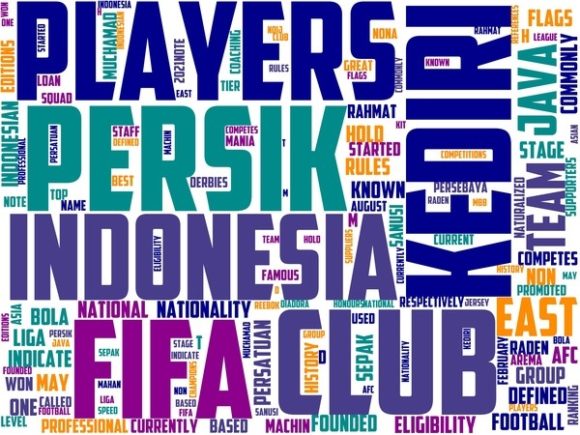
Kediri Wordart Wallpaper: Hand-Drawn Wordclouds That Bring Authenticity to Modern Design
Today’s creative professionals and small business owners face a quiet but persistent challenge: standing out without sounding generic. Stock graphics feel impersonal. Overly polished digital fonts lack warmth. And mass-produced patterns rarely reflect the unique voice of a brand, classroom, or handmade product line. Enter Kediri Wordart Wallpaper — not just another digital asset, but a hand-drawn, colorful wordcloud built for real-world application. Its strength lies in its tactile authenticity: each letter is sketched by hand, each color thoughtfully layered, and each arrangement designed to breathe life into physical and digital surfaces alike.
Why Hand-Drawn Wordclouds Are Resonating Now
We’re seeing a measurable shift away from sterile uniformity and toward intentional imperfection — what designers call “human-centered texture.” This isn’t nostalgia for analog tools; it’s a response to how people actually engage with design today. Social media feeds overflow with algorithmically generated visuals, making hand-crafted elements feel like quiet acts of resistance. Consumers notice — and respond — when a greeting card, notebook cover, or café menu carries visible human gesture. Educators use hand-drawn wordclouds to reinforce vocabulary in ways that feel less like testing and more like discovery. Small-batch textile designers print Kediri Wordart Wallpaper motifs on tote bags and pillow covers because the organic flow of words invites touch and conversation, not just passive viewing.
This trend aligns with broader changes in production workflows. With affordable home printers, heat-transfer vinyl cutters, and print-on-demand platforms now accessible to freelancers and makers, the barrier between concept and physical object has never been lower. A designer no longer needs a studio or large inventory to launch a capsule collection of branded stationery — they need a strong visual idea, flexibility across formats, and assets that translate faithfully from screen to fabric or ceramic. Kediri Wordart Wallpaper meets that need precisely: it’s vector-based (so it scales cleanly), color-rich (but not overwhelming), and structured loosely enough to allow cropping, layering, or selective highlighting without losing cohesion.
From Wallpapers to Wearables: Practical Uses Across Real Projects
The versatility of this wordcloud isn’t theoretical — it’s baked into how creators are already using it. Consider these grounded examples:
- A boutique yoga studio prints a cropped section of the wordcloud onto reusable cotton bags, pairing “breathe,” “ground,” and “flow” with soft coral and sage tones — reinforcing values while serving as functional branding.
- An independent educator builds weekly reading logs around themed wordcloud excerpts: “curious,” “imagine,” “question,” “connect” appear on printable PDFs students decorate before class — turning assessment into low-stakes creative engagement.
- A craft brewery uses the same base Kediri Wordart Wallpaper file to generate three distinct assets in one afternoon: a taproom banner (“hop,” “craft,” “local,” “fresh”), coaster designs (small clusters of two–three words), and limited-edition label accents — all consistent in tone, none requiring custom illustration time.
- A freelance graphic designer includes a subtle, monochrome version of the wordcloud as background texture in a client’s presentation deck — adding visual rhythm without competing with content.
What makes this possible is intentionality in construction. Unlike AI-generated word clouds — which often prioritize density over readability or place high-frequency terms awkwardly at the center — Kediri Wordart Wallpaper balances emphasis, spacing, and visual hierarchy through manual composition. Words don’t collide. Color transitions support legibility. Negative space is respected. That craftsmanship translates directly into usability: whether printed at 2 inches wide on a luggage tag or blown up to 4 feet wide for a retail wall mural, the integrity holds.
Evolving Beyond Decoration: When Words Become Tools
Wordclouds have long served as data summaries or decorative flourishes. But today’s most effective versions — like those in Kediri Wordart Wallpaper — function as active design tools. They help clarify messaging before a single headline is written. For marketers drafting an email campaign, selecting five core words from the cloud (“trusted,” “simple,” “responsive,” “clear,” “you”) can anchor tone and phrasing across subject lines and body copy. For product developers sketching packaging concepts, overlaying the wordcloud on mockups reveals how typographic weight and color interact with real-world materials — does “bold” read as confident or aggressive on matte kraft paper? Does “gentle” soften when paired with muted teal?
This utility extends to accessibility-aware workflows. Because the hand-drawn style avoids extreme contrast traps (like neon text on black backgrounds) and maintains generous letter spacing, it adapts well to inclusive design practices — especially when used alongside clear sans-serif body text. It’s also inherently modular: users aren’t locked into a single layout. Need just “create” and “inspire” for a workshop badge? Crop them. Want to emphasize “community” and “together” in a nonprofit annual report? Isolate and enlarge. The format supports iteration, not rigidity.
Designing With Integrity — Not Just Aesthetics
There’s growing awareness among professionals that visual choices carry implicit messages. A sleek, ultra-thin font may signal innovation — but also distance. A rigid grid layout suggests precision — yet can feel cold in contexts centered on care or creativity. Kediri Wordart Wallpaper occupies a thoughtful middle ground: expressive but not chaotic, joyful but not childish, detailed but not cluttered. Its hand-drawn nature signals care without demanding perfection — a subtle but meaningful alignment with values many modern brands strive to embody: transparency, approachability, sustainability, and human scale.
That resonance matters in practice. When a therapist selects stationery featuring “listen,” “hold,” and “grow” in warm, uneven strokes, it visually reinforces therapeutic presence before the first session begins. When a sustainable fashion label applies the same wordcloud to garment tags — using recycled cotton and soy-based ink — the design becomes part of the story, not just decoration. It’s this layering of meaning, material, and method that transforms a simple graphic into a quiet amplifier of intent.
Getting Started Without Overcomplicating It
You don’t need advanced software or formal design training to use Kediri Wordart Wallpaper effectively. Start small: open the file in any vector editor (Illustrator, Affinity Designer, or even free tools like Inkscape), identify three words that reflect your current project’s core idea, and experiment with size, rotation, and placement against a neutral background. Try printing a test swatch on your home printer before committing to fabric or sticker stock. Notice how different colors affect mood — a cluster in terracotta and olive feels grounded; the same words in lemon yellow and sky blue read as energetic and open.
For teams, treat the wordcloud as a collaborative prompt. Ask colleagues to circle the two words that best represent your team’s working style this quarter. Use their selections to guide internal slide templates or Slack channel banners. In classrooms, invite students to annotate printed copies — adding definitions, sketches, or personal connections beside each term. The hand-drawn quality invites interaction, not just observation.
Ultimately, Kediri Wordart Wallpaper succeeds not because it replaces other tools, but because it complements them — adding warmth where digital feels flat, clarity where messaging feels vague, and humanity where scale threatens to erase voice. It’s design that remembers it serves people first — whether those people are holding a mug, flipping through a zine, choosing a gift, or launching a new venture. And in a world increasingly shaped by both speed and sensitivity, that balance is anything but decorative.