Jixi Wordart Banner: A Flexible Visual Tool for Creative Execution
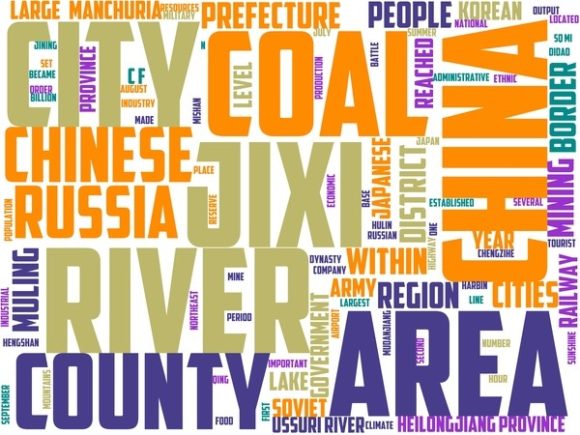
When you’re designing a product label, planning a classroom activity, launching a small-batch apparel line, or preparing a workshop handout, visual clarity and emotional resonance matter. The Jixi Wordart Banner isn’t just decorative—it’s a functional asset that bridges intention and execution. Built around a hand-drawn, colorful wordcloud aesthetic, it serves as both a design element and a communication anchor. Its strength lies in how easily it integrates into real-world workflows—whether you’re sketching early concepts, finalizing print-ready files, or adapting assets across physical and digital touchpoints.
Where It Fits in Your Creative or Business Workflow
The Jixi Wordart Banner rarely stands alone. Instead, it operates at key inflection points: before a project begins (as a mood-setting guide), during development (as a consistent visual motif), and after launch (as part of branded collateral). For example, an educator might use it to preview vocabulary themes before a unit starts—printing it on posters or embedding it in slide decks. A small-batch jewelry maker could place the same banner on packaging inserts, tags, and Instagram story highlights, reinforcing brand voice without repeating text verbatim.
Unlike rigid templates, this banner adapts. Its hand-drawn texture and vibrant color palette support authenticity—important when audiences respond to human-made cues over sterile automation. That makes it especially effective in contexts where warmth and approachability are strategic advantages: handmade goods, wellness branding, educational materials, and community-driven initiatives.
Practical Use Across Physical and Digital Outputs
Because the Jixi Wordart Banner is designed with versatility in mind, it works across mediums without requiring heavy editing. You can scale it for large-format printing on fabric banners or reduce it cleanly for die-cut stickers. Its vector-friendly structure ensures crisp edges on textiles, ceramics, and paper stock—even at 300 DPI. Here’s how professionals apply it across common outputs:
- Clothing & Textiles: Applied via heat transfer or screen print; the organic linework holds up well on cotton, linen, and blended fabrics.
- Packaging & Tags: Used on kraft paper labels, woven hangtags, and matte-finish boxes—its contrast-rich palette reads clearly against natural substrates.
- Digital Promotions: Embedded in Canva templates, email headers, and social media carousels; its visual weight draws attention without competing with body copy.
- Educational Tools: Printed on laminated flashcards or interactive bulletin boards; students connect more readily with illustrated language than plain lists.
- Home Décor & Accessories: Transferred onto ceramic mugs, embroidered onto pillow covers, or laser-etched onto wooden coasters—the wordcloud shape lends itself to circular, square, and rectangular framing.
This breadth isn’t accidental. Each element—color saturation, stroke variation, spacing between words—is calibrated for legibility and adaptability. That means less time troubleshooting resolution issues or reworking layouts for new formats.
Integration With Other Tools and Assets
You’ll rarely use the Jixi Wordart Banner in isolation. It pairs naturally with tools like Adobe Illustrator for precision scaling, Procreate for custom overlays, or even free platforms like Inkscape or Photopea if budget or access is a constraint. When combined with typography systems—say, pairing it with a clean sans-serif for supporting text—you create visual hierarchy without sacrificing personality.
For teams, consistency matters. Store the banner file in shared cloud folders with clear naming conventions (e.g., “Jixi_Wordart_Banner_v2_CMYK.ai”) and include usage guidelines: recommended minimum size, safe margins for cutting, and acceptable background colors. This prevents misalignment across designers, printers, or contractors—especially important when multiple people handle production stages.
If you're using it alongside photography or illustration, treat the banner as a compositional anchor rather than a filler. Place it where the eye naturally rests—often near the bottom third of a poster or centered on a notebook cover—and let surrounding whitespace do the work. Overcrowding dilutes impact; thoughtful placement amplifies it.
Preparation and Quality Control
Before deploying the Jixi Wordart Banner, verify three things: color mode, resolution, and context fit. For print, confirm CMYK conversion and check Pantone equivalents if brand guidelines require exact matches. For web, export PNG-24 or SVG depending on whether transparency or scalability is prioritized. And always test-print or soft-proof on the intended substrate—a banner that looks vibrant on screen may mute on uncoated paper or fade on polyester fabric.
Also consider audience context. A wordcloud meant for children’s learning materials should emphasize readability over artistic nuance—larger word weights, higher contrast, fewer overlapping elements. For professional conferences or business publications, subtle tonal shifts and tighter kerning may better align with expectations of polish and restraint.
Long-Term Usability and Iteration
A hallmark of sustainable design is reuse—not repetition. The Jixi Wordart Banner supports iteration through modular thinking. Swap out individual words to reflect seasonal campaigns (“Summer Joy” → “Winter Wonder”), adjust hue families to match quarterly brand refreshes, or layer it under transparent gradients to shift mood without redesigning from scratch.
Keep a version log: note which variant was used where and when. If you run A/B tests on packaging or landing pages, track engagement metrics tied to specific banner versions. Over time, patterns emerge—certain color combinations drive higher click-throughs; particular word groupings improve retention in workshop settings. That data informs smarter future adaptations.
Workflow Examples in Action
Scenario 1 — Launching a Mindfulness Journal
A freelance designer begins by selecting core themes: presence, breath, stillness, reflection. She places the Jixi Wordart Banner on the journal’s front cover, then echoes select words inside as chapter headers. Later, she repurposes the same banner layout for配套 stickers included in the box—no redrawn assets, no mismatched tones.
Scenario 2 — Small-Business Holiday Campaign
A ceramicist uses the banner to unify her holiday collection: printed on gift tags, featured in email subject lines (as embedded image), and animated subtly in a 5-second Instagram reel intro. Because the visual language remains constant, customers recognize the campaign instantly—even when viewing only one touchpoint.
Scenario 3 — School Curriculum Development
A curriculum coordinator imports the banner into Google Slides as a master slide background. Teachers then add lesson-specific keywords while preserving the underlying structure. Students see continuity across units, reinforcing thematic connections without needing explicit explanation.
Making It Work for Your Routine
Start small. Pick one recurring output—your newsletter footer, your Etsy shop banner, or your weekly planner cover—and apply the Jixi Wordart Banner there. Observe how it changes perception, interaction, or cohesion. Then expand outward: apply it to two related assets next, then three. Avoid trying to retrofit every existing file at once. Integration gains momentum when it solves a real need—not when it’s forced into every corner.
Finally, remember that usefulness trumps novelty. The Jixi Wordart Banner earns its place not because it’s trendy, but because it simplifies decisions: what to highlight, how to unify disparate pieces, and where to introduce warmth without compromising clarity. When your workflow values intentionality over ornamentation, tools like this become infrastructure—not decoration.